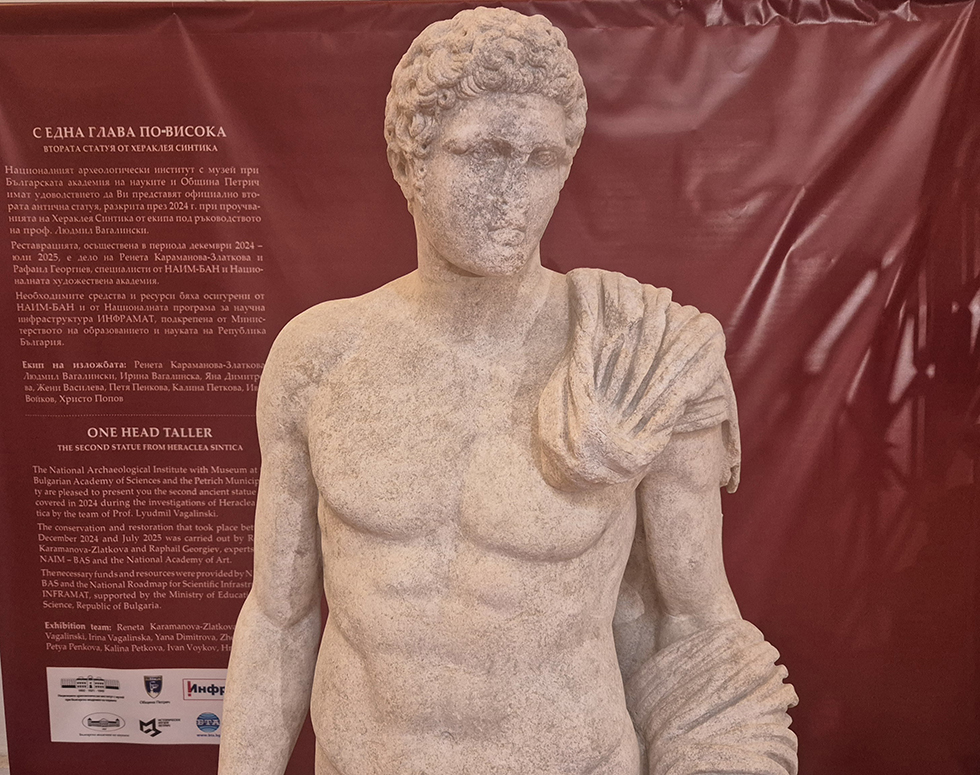
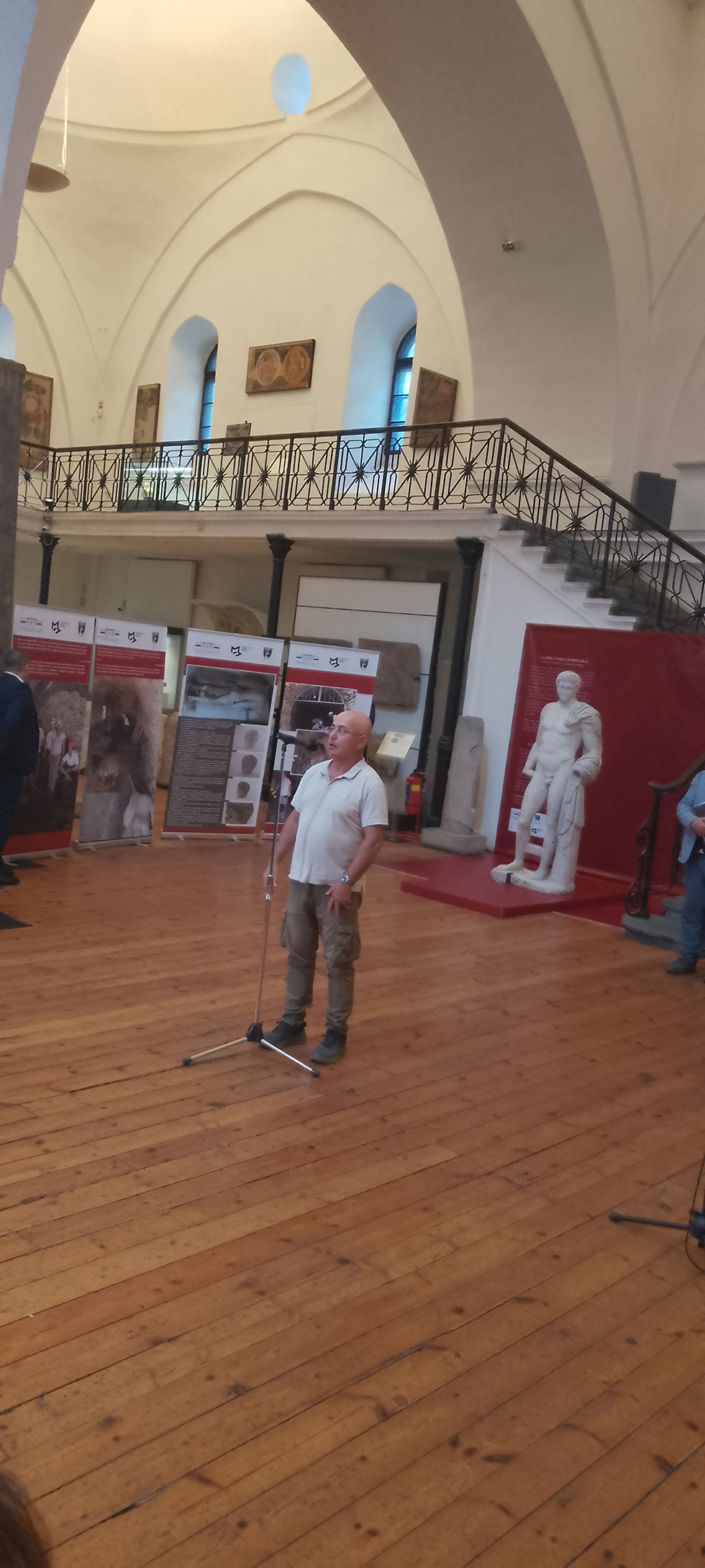
The second statue from Heraclea Sintica was shown to the public for the first time – fully restored, standing, and with its head on its shoulders.
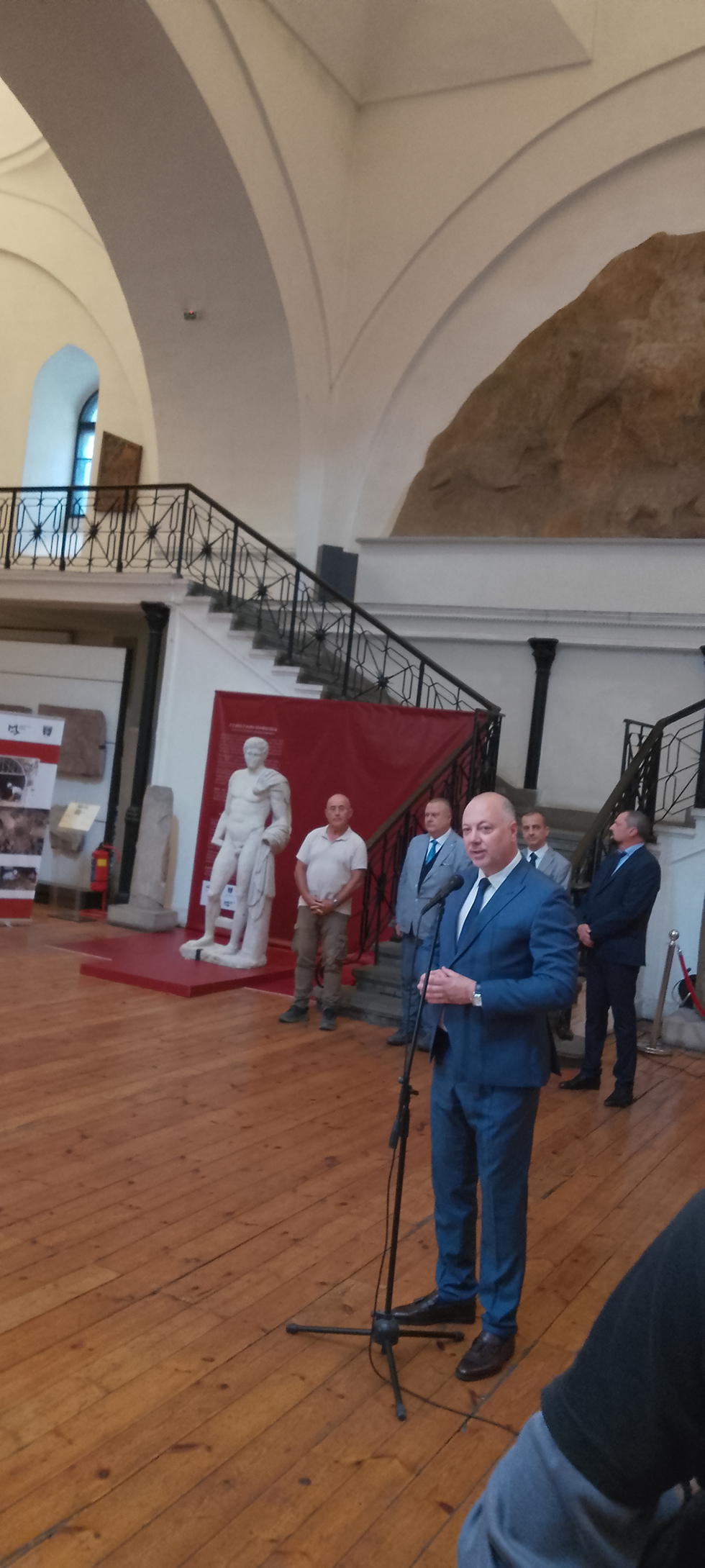
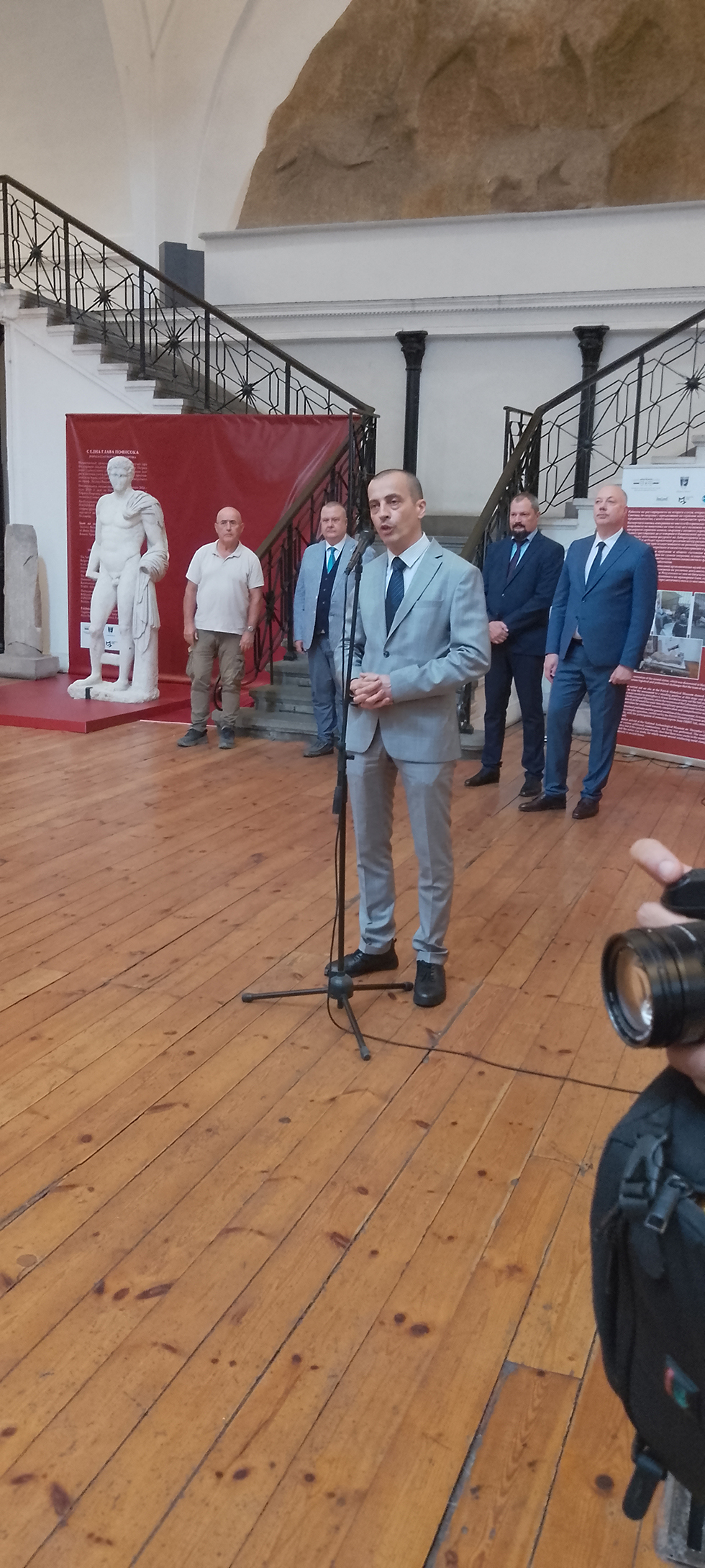
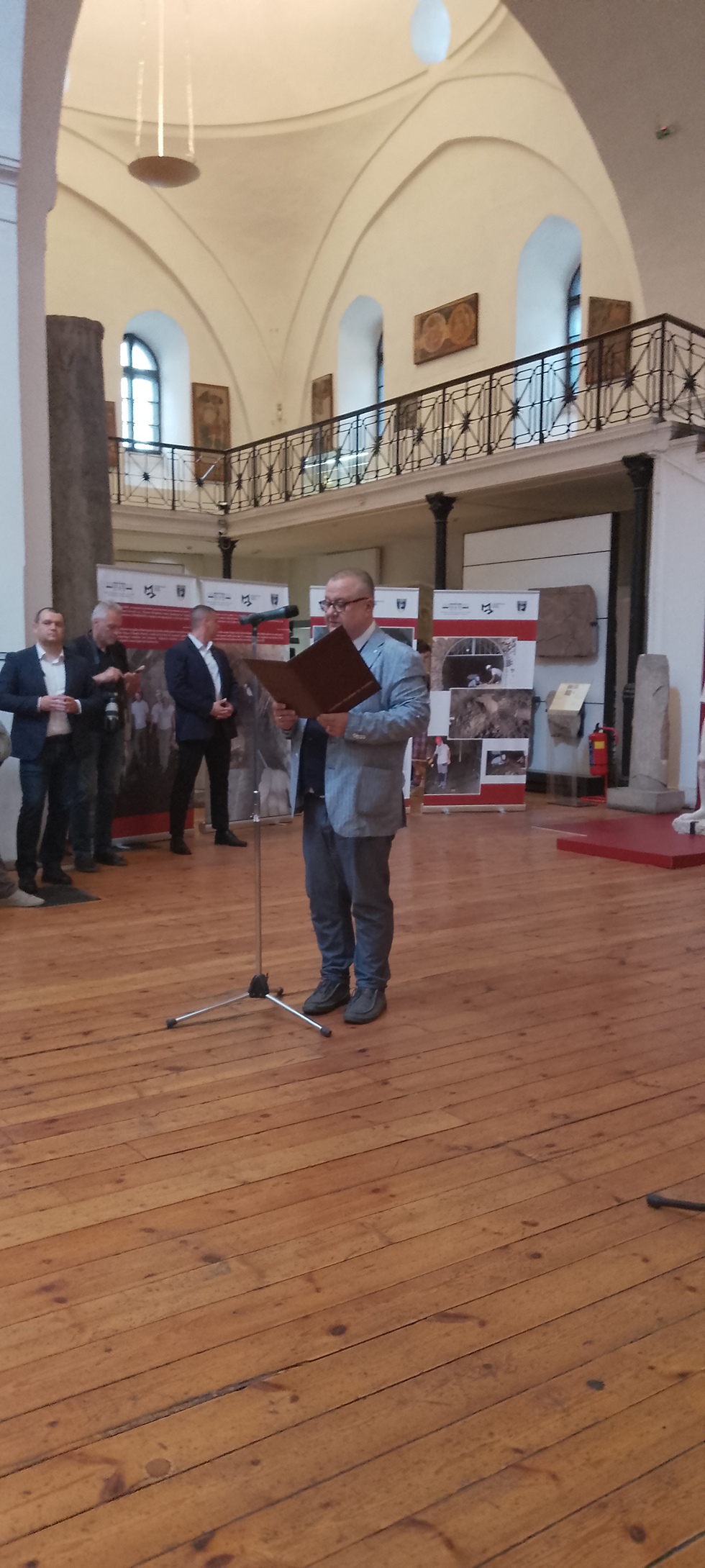
The fully restored, life-size ancient marble statue, discovered in 2024 in Heraclea Sintica by the team of Prof. Dr. Lyudmil Vagalinski, was presented for the first time – standing and with its head on its shoulders. This took place on 5 August at the National Archaeological Institute with Museum at the Bulgarian Academy of Sciences in Sofia, on the occasion of the opening of the exhibition “One Head Taller. The Second Statue from Heraclea Sintica”, which was organised jointly with the Municipality of Petrich.
The statue is the second to be discovered by the same team during archaeological excavations in the Great Canal of the ancient city near the village of Rupite. Unlike the first statue, which was in much better condition and was restored on site at the Petrich Museum, the second statue was severely damaged, with its head separated from the body. Its condition required its transfer to Sofia, where restorers from the National Archaeological Institute with Museum at the Bulgarian Academy of Sciences and sculptors from the National Academy of Arts spent more than seven months carrying out a complex process of strengthening, cleaning, and restoring the marble monument, which had lain in the ground for more than 1,600 years.
The restoration was carried out through a multi-stage conservation process that began with an assessment of the statue's condition and the identification of destructive processes. First, layers of soil were removed mechanically, followed by ultrasonic cleaning of the marble surface. Compresses containing various substances were repeatedly applied to soften hard deposits and dissolve salts that had penetrated the stone through the soil. By removing the dirt, the original surface was revealed once again, helping to prevent further deterioration and loss.
During the process, structural damage within the marble—previously hidden beneath the surface—was discovered. To ensure the statue’s safety and stability, carbon anchors were used to reinforce cracks in critical areas. These anchors are a modern analogue of the ancient iron clamps once used during the statue’s original creation. All interventions were kept to a minimum and were precisely aligned with contemporary standards for the protection of cultural heritage and the safety of visitors.
The restoration was funded by NAIM-BAS, with additional support and resources provided by the National Programme for Scientific Infrastructure INFRAMAT, supported by the Ministry of Education and Science.
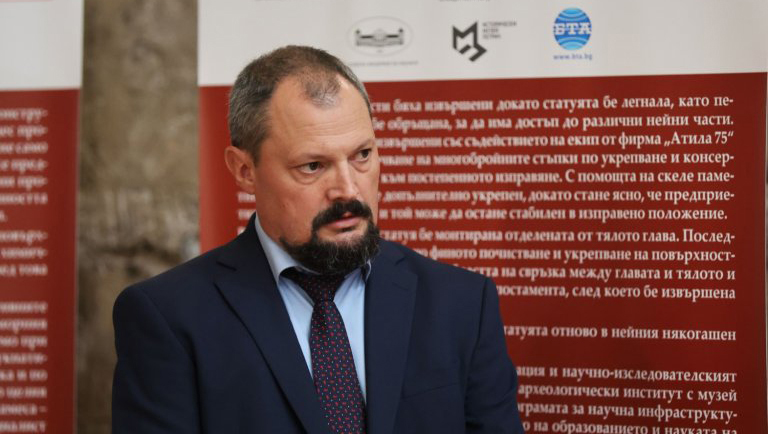
"Partnership – that is the word that best describes this event. Our task was to unite all parties involved in this complex process to ensure the best possible outcome—not only for the monument itself, but for the preservation of our cultural heritage. In this system, there are no ‘little’ or ‘big’ participants – everyone is important. Each individual involved in the restoration made an irreplaceable contribution. Without their work, we would not have been able to achieve our goal,” said Assoc. Prof. Dr. Hristo Popov, Director of NAIM-BAS.
Among the official speakers at the event were the Deputy Minister of Culture, Assoc. Prof. Dr. Todor Chobanov, and the Deputy President of the Bulgarian Academy of Sciences, Prof. Dr. Emanuil Mutafov, who also congratulated the teams involved in the statue’s restoration.
The statue will remain on display at the National Archaeological Museum in Sofia until the autumn, after which it will be returned to the Historical Museum in Petrich.